 Posted by
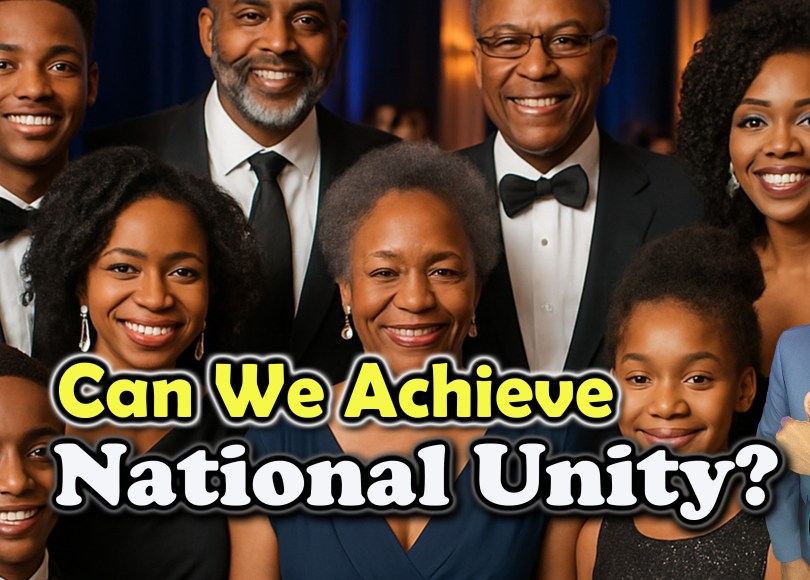
 Achieving perfect unity across our community has been a sore spot for decades. When bad things happen to us based on our skin color or culture, we issue a call to action (CTA) to unite and respond. When we fail to unify and do something the way each of us wants, we get frustrated. In our disappointment, we say things like “see, that’s why we never get ahead because we’re divided.”
But is skin color or culture alone an effective reason to overcome the divisions among us and unite?
Powerful forces outside our community have been successful in poisoning our minds with divide and conquer strategies that have kept us marginalized and fractured to the point we’re a perpetual underclass. They created the left vs right paradigm and for decades, we’ve been mentally enslaved to it.
We’re divided economically (upper class vs lower class). Other areas of division:
Educated vs uneducated
Young vs old (generational divide)
Women vs men
Spiritual vs secular/agnostic
LGBT vs straight
Identity (FBA vs ADOS vs Black vs Black American vs African American)
There are other areas of divisions. To be fair, no group or community has achieved perfect unity of millions of people in history. It would be naive to think perfect unity is achievable. All groups are fractured into subgroups. However, other communities are more effective at collective group think than we are. Again, they’re not 100% effective, but if they were, say, 70% effective, then we are perhaps 40% effective. We used to be highly effective at it over a century ago when we were more interdependent on each other and didn’t allow outside forces to divide and conquer us so easily. Yes, we’re more divided now than we were under the oppressive Jim Crow regime that stole our labor and eventually our wealth.

But how do we forge a path towards unity that is effective enough to unite at least 70% of us? Skin color is not enough. Our shared, traumatic experience across several centuries of Euro American tribal trauma in our native soil here is not enough. We need a strategy and blueprint to guide us to think like a nation within a nation. Nations have common ideals, shared values, unifying symbols to rally around and so on. Successful nations value the importance of keeping families intact and healthy enough to keep the population growing as we see with the concerns of China and India to keep their vast populations growing at a certain rate to avoid extinction. We used to understand this but over six decades, we’ve allowed an enemy to convince us otherwise.
We have to move away from random, unstructured and sometimes emotional calls for unity that never produce any outcomes. We must move towards a tangible, outcome-based roadmap for execution. Undertaking such an initiative won’t be cheap and will take years but we have to finally start somewhere.
The framework for coming up with the next steps starts with a set of simple assumptions about our current level of unity. One assumption is that we lack any unity, meaning that 0% of us are united. On the other end of the spectrum, another assumption is that all of us are perfectly united with 100% unity. Both extremes are impossible. But how united are we right now? Are we at 20%? 30% 40%? Ideally, if we choose a target of 70% as the end goal, we can establish a vision and roadmap to get us there.
Assuming 0% unity as a baseline, here’s a structured approach we can use: the kind of framework a benevolent, effective leader would apply to unify millions of people with different strategies, subgroup needs, and special interests:
1. Establish a Shared Vision and Purpose
- Define a unifying “north star” – Something broad and aspirational (for instance, prosperity, security, fairness, innovation) that all subgroups can agree is worth pursuing, even if they differ on how. This is a very important point that we’ve often missed over the years.
- Narrative of inclusion – Communicate that each subgroup’s unique needs are part of the whole, not distractions from it.
2. Build Trust and Legitimacy
- Demonstrate fairness – Create transparent processes for decision-making so no subgroup feels sidelined.
- Listen before leading – Host listening tours, forums, or digital town halls where people can express concerns without judgment. Such tours should not be opportunities for those among us who like to scam.
- Deliver small wins early – Solve a few pressing issues that cut across divisions to show competence and sincerity. Here’s another important point as we often expect one big win, and when it is too big to achieve, we lose focus out of frustration.
3. Recognize Subgroup Needs Without Fragmenting
- Subsidiarity principle – Empower subgroups to handle their own unique issues where possible, while the central leadership focuses on shared goals.
- Representation mechanisms – Advisory councils or boards where each subgroup has a voice in shaping strategy. These councils can be broken down into a geographical hierarchy at the community, city, county, state and national level.
4. Create Common Ground Through Shared Projects
- Joint initiatives – Launch large-scale projects (education, infrastructure, digital inclusion, environmental resilience, etc.) that require cooperation from all subgroups.
- Interdependency framing – Highlight how success in one subgroup supports others (for example, rural farming supports urban food supply, tech hubs create jobs across regions).
5. Manage Conflict Constructively
- Acknowledge disagreements openly – Suppressing differences creates resentment; acknowledging them fosters maturity. This has been a sore spot for our unity for at least 60 years. It’s ok to disagree without being destructive.
- Mediation and compromise – Appoint respected neutral mediators to help resolve disputes.
- Shift focus from “win-lose” to “co-creation” – Encourage problem-solving workshops where multiple strategies are tested in pilot programs.
6. Use Communication as a Binding Force
- Multi-channel storytelling – Reach people where they are: speeches, social media, community meetings. Do this with a consistent message of unity.
- Celebrate shared identity – Symbols, rituals, slogans, or events that remind people they belong to something larger. This is where culture becomes important.
- Transparency and honesty – Regular updates on progress, setbacks, and next steps, so people feel respected and informed.
7. Develop Leadership Benevolence in Practice
- Lead by service, not ego – Model humility, integrity, and accountability. And definitely no scamming. Hate to have to repeat this but as we’ve seen recently, some notable scammers have diverted our time, energy and money with spectacular scams.
- Elevate others – Promote diverse leaders from subgroups into visible roles.
- Guard against favoritism – Make sure resources, recognition, and opportunities are distributed fairly.
8. Balance Short-Term Action with Long-Term Unity
- Immediate pain relief – Address urgent crises (educational, economic, social, health, nutrition) to build goodwill.
- Long-term institution building – Create structures (charters, councils, educational programs) that outlast the leader, ensuring sustained unity. Thinking beyond a single leader is extremely important.
✅ In short: A benevolent, effective leader unites millions not by erasing differences, but by weaving them into a larger shared story, supporting fairness in process, providing platforms for all voices, and showing through action that unity serves everyone.
In future posts, I will discuss a detailed playbook and other tools to help with this roadmap strategy. It’s gonna be a powerful, groundbreaking series, so be sure to subscribe and follow us across all platforms (@AffluentBlacks).
 Affluent Blacks of Dallas