 Posted by
 Hey, beautiful people. Spend enough time following business news around DFW and you start noticing that the stories don’t sound quite the way they did a decade ago (back when the mature crowd hung out at Buttons in Addison and Ft Worth). The conversation used to lean heavily on population growth, affordable housing, corporate relocations and the familiar advantages of doing business in Texas.
Those things still matter. But something else is happening.
Dallas is increasingly showing up in conversations about finance, artificial intelligence, global aviation, advanced technology and high-end professional talent. Some of the institutions arriving here aren’t simply opening another regional office. They’re treating North Texas as a place where consequential business gets done.
For Black professionals in Dallas—and for those around the country wondering whether all the talk about DFW is justified—that distinction is worth watching.
But one of the more interesting examples may be coming from a very different part of Dallas.
From Bonton to DFW Airport
Bonton Farms plans to open its first location outside South Dallas this fall inside Terminal A at Dallas Fort Worth International Airport, near Gate A17.
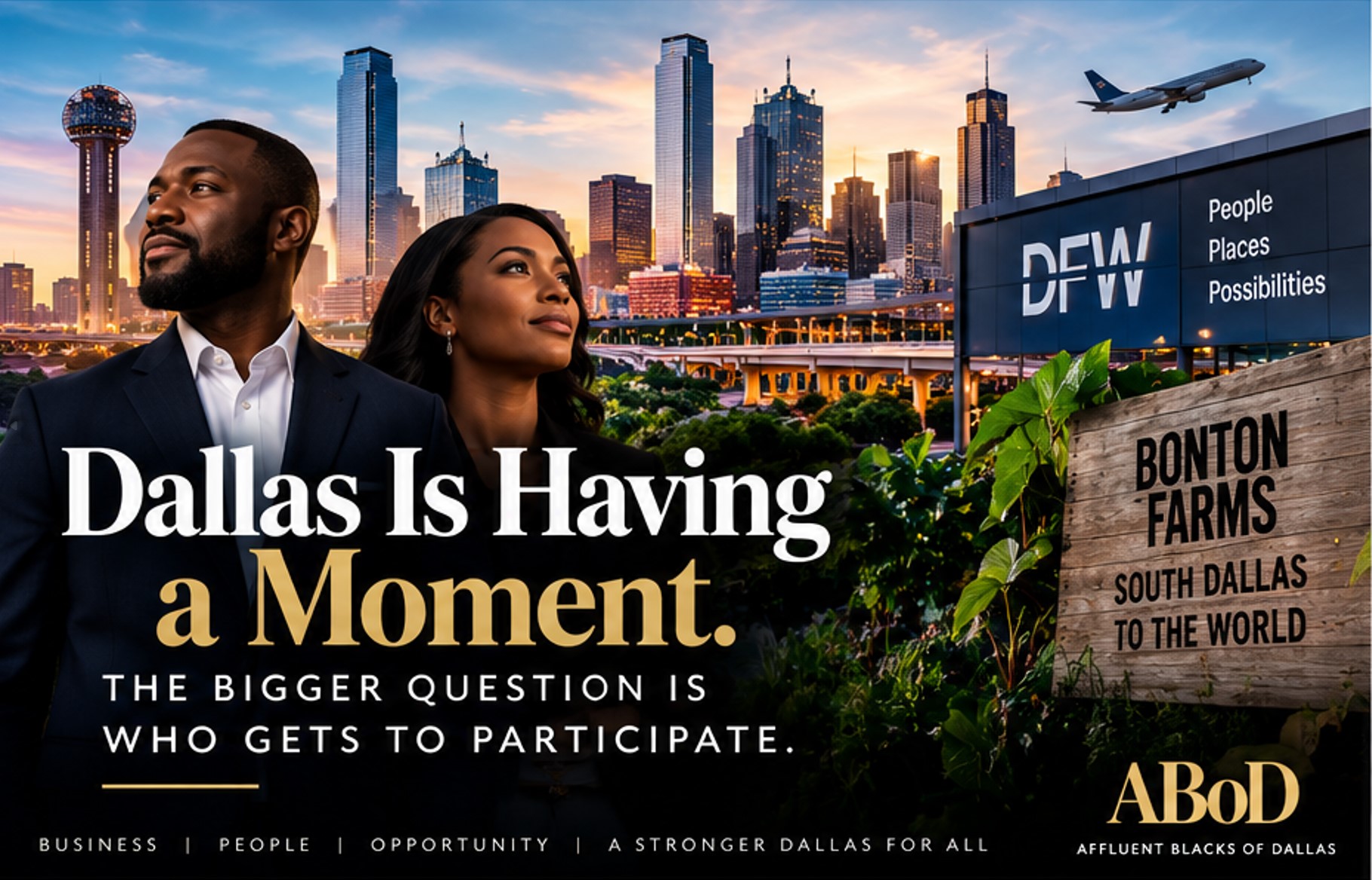
The partnership with WHSmith North America will put Bonton Farms products in front of travelers passing through one of the world’s busiest airports. The store is expected to carry locally produced honey, jams, goat-milk soaps, food, apparel and gifts. Some merchandise will come from “Bontonpreneurs,” entrepreneurs participating in Bonton Farms’ business-development programs.
That’s an interesting retail story by itself.
The more important part is where the journey starts.
Bonton Farms grew out of work in a South Dallas neighborhood where residents have dealt with poverty, limited access to fresh food and other long-running economic challenges. Its activities have expanded beyond urban farming into workforce development, entrepreneurship, health and wellness, housing and economic stability.
Now imagine someone connecting through DFW from New York, London or Los Angeles.
They walk into an airport store, buy a jar of honey or another locally made product and encounter Bonton for the first time.
South Dallas has suddenly acquired a storefront to the world.
There is something worth appreciating about that.
There is also something worth studying.
A community organization doesn’t gain much simply because people elsewhere know its name. The interesting question is whether increased visibility creates revenue, jobs, customers and opportunities that make their way back into the community that created the brand.
That is the part ABoD will be watching.
Meanwhile, Dallas is accumulating financial clout
The Bonton story is unfolding against a much larger change in the regional economy.
Dallas is increasingly being described as a financial center in its own right.
The “Y’all Street” nickname can sound like clever Texas marketing until you look at what has actually been assembling here.
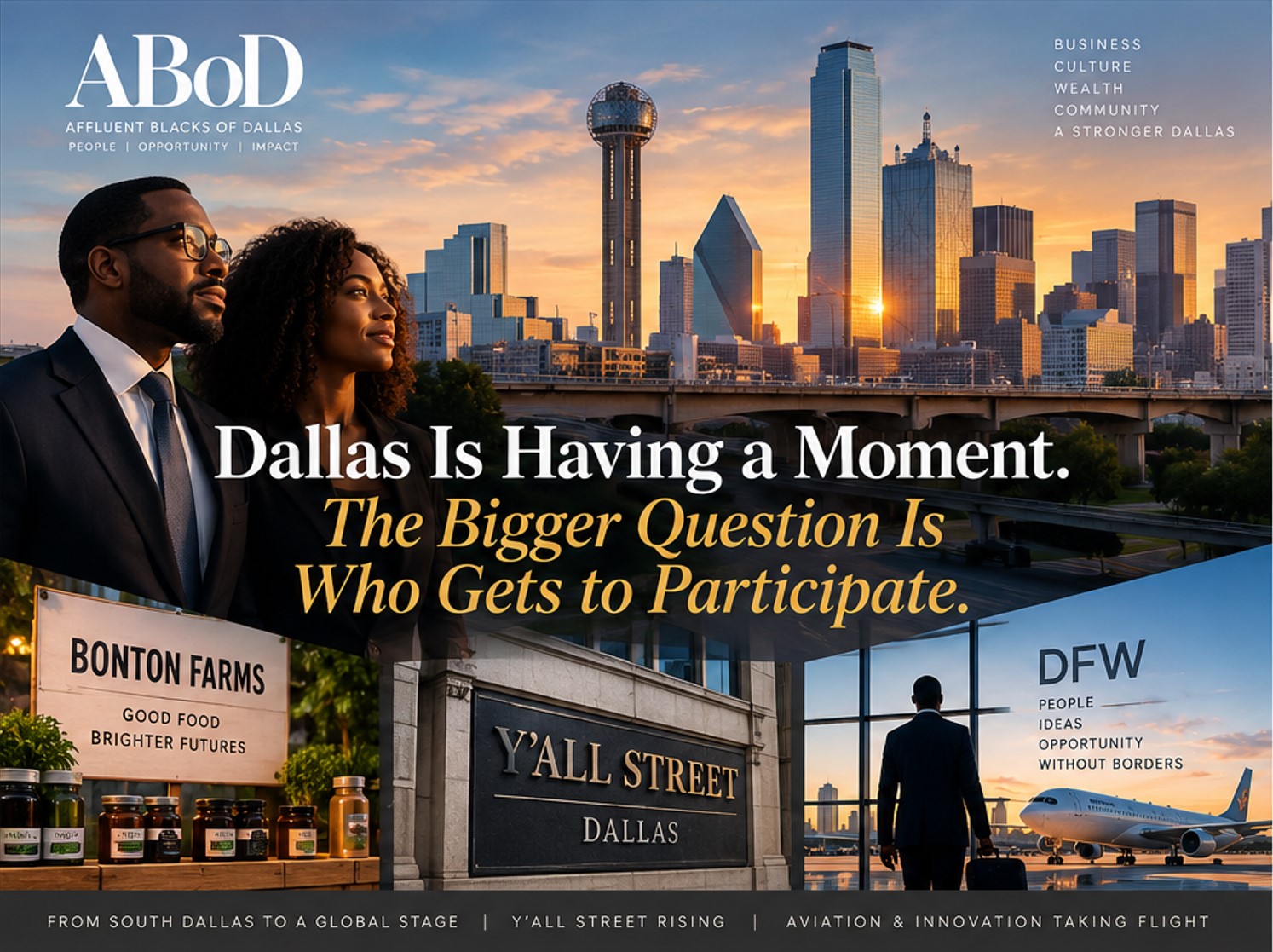
NYSE Texas now has a Dallas presence. Nasdaq has expanded its Texas strategy. The Texas Stock Exchange is based in Dallas and backed by major financial institutions. JPMorgan Chase, Goldman Sachs, Charles Schwab and other financial companies have established or expanded substantial operations in the region. Recent reporting describes Dallas as an emerging financial center as Texas’ financial-services employment has approached 940,000 workers statewide.
None of that guarantees that Dallas becomes a second New York, nor does it need to.
The more practical question for people who live here is what happens around those institutions.
Financial centers need more than traders and investment bankers. They employ technology architects, cybersecurity specialists, accountants, attorneys, analysts, commercial bankers, wealth advisers, risk professionals, consultants, operations leaders and executives.
Then another economy grows around those workers.
They buy homes. They hire financial advisers. They eat in restaurants. They join nonprofit boards. They invest in businesses. Their companies purchase professional services. Their children attend schools and universities. Some eventually leave corporate employment and start companies of their own.
That’s why the growing financial stature of Dallas should matter even to someone who has no interest in working on Wall Street—or Y’all Street.
Tomorrow, another industry comes to Dallas
There’s another useful indicator arriving this week.
Future Travel Experience Global begins September 8 at the Gaylord Texan Resort & Convention Center in Grapevine and runs through September 10.
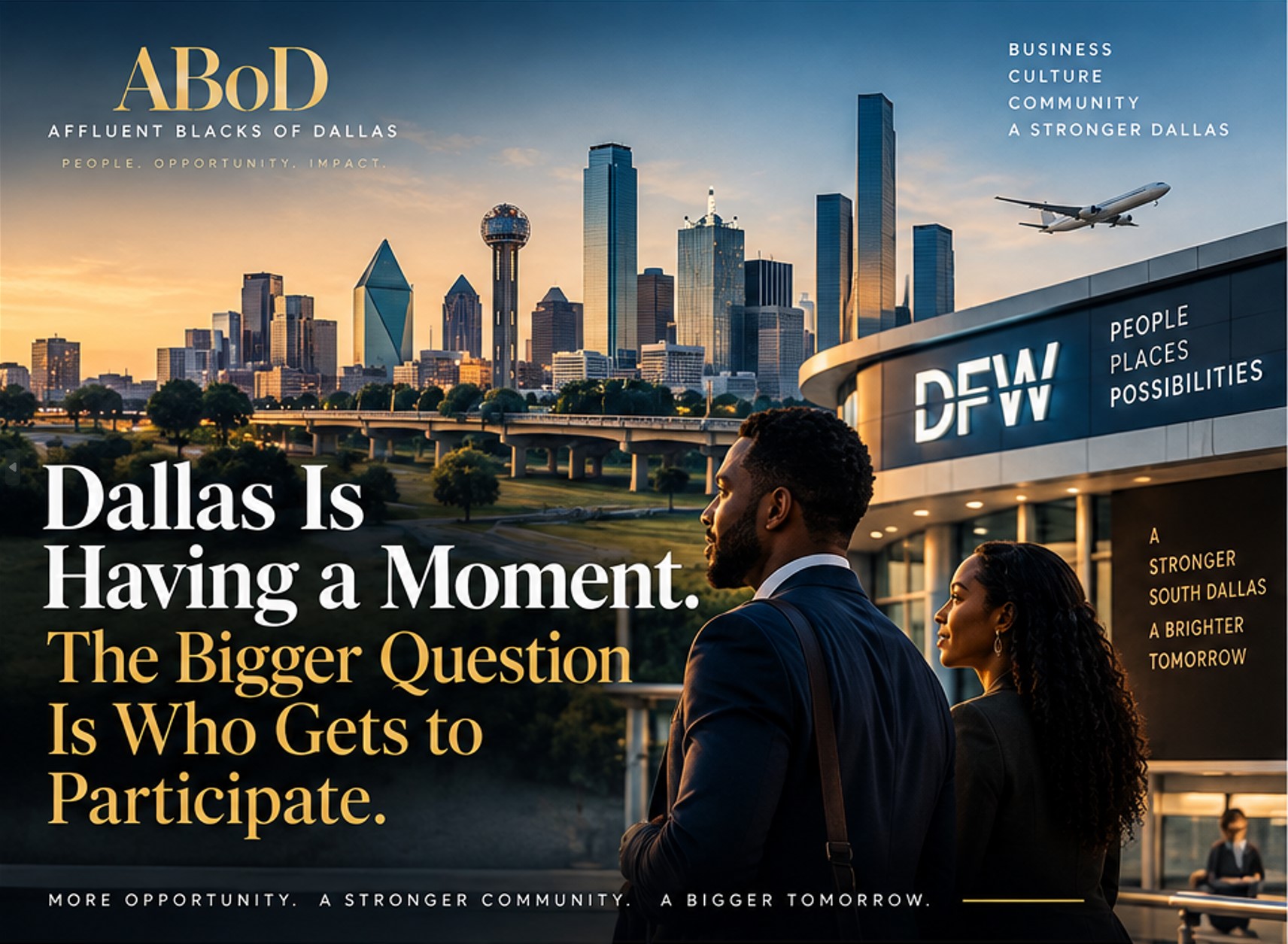
The organizers call it the “CES of Aviation.” Marketing language deserves some skepticism, but the participant list makes the event noteworthy.
More than 2,000 aviation and technology leaders are expected, and the organizations represented include airlines, airports, technology companies, startups, aircraft manufacturers and government agencies from around the world. DFW Airport, Southwest Airlines and Dallas Love Field are headline partners.
The conversations won’t be limited to airplanes.
AI, robotics and the Internet of Things are on the agenda. So are baggage technology, digital passenger experiences, airport modernization and the increasingly complicated question of how artificial intelligence changes hospitality without removing the human part travelers actually value.
There is even a behind-the-scenes DFW Airport tour that is already fully booked.
For three days, people responsible for making decisions about the future of global air travel will be gathering in North Texas.
That doesn’t make Dallas an aviation-technology capital overnight. DFW already had a considerable head start: one of the world’s largest airports, American Airlines headquartered in Fort Worth and Southwest Airlines headquartered in Dallas.
What the conference illustrates is the advantage of having an industry cluster.
Once enough companies, talent, infrastructure and customers accumulate in one place, conferences come. Vendors follow. Consultants develop specialties around the industry. Startups see customers nearby. Universities have a reason to develop relevant programs. Experienced employees move between companies and carry knowledge with them.
That’s how an economic ecosystem becomes more valuable than the individual companies inside it.
What should Black Dallas do with this?
This is where the story becomes more consequential for Affluent Blacks of Dallas.
It’s easy to celebrate regional growth after somebody else has already captured the opportunity.
A better question is whether Black Dallas is positioned early enough to participate in the next stage of it.
For an established professional, that could mean recognizing that Dallas’ expanding financial and technology sectors may create career moves that once required relocating to another major market.
For an entrepreneur, it means looking beyond consumer businesses and asking what these expanding industries buy.
Cybersecurity. Software. Construction. Recruiting. Legal services. Marketing. Data analytics. Facilities management. Consulting. Catering. Transportation. Engineering. Corporate events. Training.
Large economic ecosystems create long supply chains.
For a college student, the opportunity looks different.
A student at UNT Dallas, UT Arlington, SMU, TCU, Dallas College or another North Texas institution doesn’t have to wait until graduation to start understanding which industries are being built around them. The same is true for a high-school student in DeSoto, Duncanville, Cedar Hill, South Oak Cliff, Frisco or Fort Worth who is deciding whether computer science, finance, engineering, aviation, cybersecurity or entrepreneurship might be worth exploring.
You can’t guarantee a young person a prosperous career by telling them to study whatever happens to be hot this year.
You can, however, help them understand the economy taking shape around them.
That is a much better starting point.
And there is a lesson in the Bonton story
The financial firms and aviation conference demonstrate one version of Dallas’ growing influence.
Bonton Farms represents another.
Its airport expansion doesn’t require pretending that the economic challenges facing South Dallas have disappeared. They haven’t.
What makes the story interesting is precisely the contrast.
A community organization rooted in a neighborhood that has often been discussed in terms of what it lacks is preparing to put products created there before an international audience.
That changes the vantage point.
The people behind Bonton aren’t waiting for South Dallas to become fashionable enough for somebody else to tell its story. They’re taking a piece of that story to the airport.
As Dallas accumulates more capital, technology, talent and national prestige, we’ll probably hear plenty about how successful the region has become.
Affluent Blacks of Dallas should be interested in something more specific.
Who is building businesses around that growth? Who is getting the jobs? Who is winning contracts? Who is acquiring assets? Which students are being prepared for the industries arriving here? Which neighborhoods are gaining economic capacity rather than simply becoming more expensive?
Those questions aren’t an argument against celebrating Dallas’ rise.
They’re how we make the rise matter.
 Affluent Blacks of Dallas