
 Posted by
 A Sudden Crisis in the Middle of Prosperity…
Dallas is booming, from tech growth to corporate relocations and a thriving Black professional class.
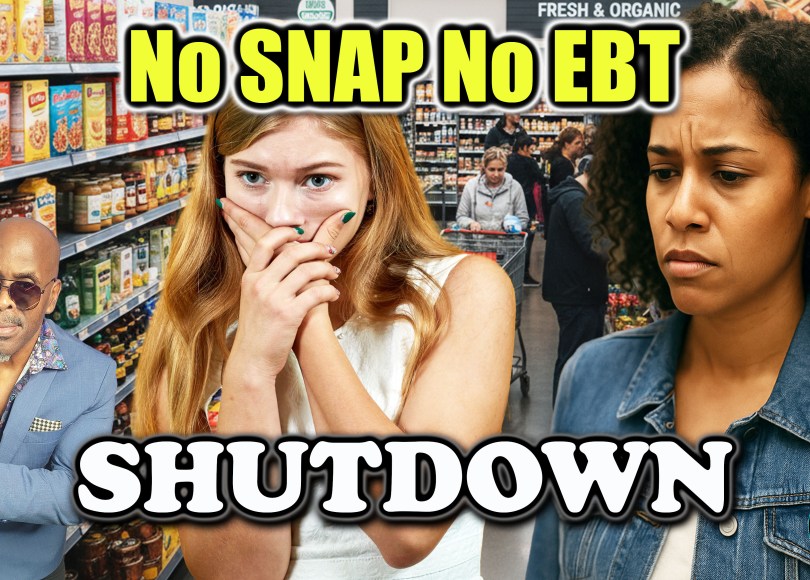
But beneath the colorful skyline, a quiet crisis is unfolding much like it is across the country: the possible suspension of SNAP and EBT benefits soon due to the ongoing federal government shutdown.
For 3.4 million Texans, including thousands of families in Dallas County, those benefits are a financial lifeline. But more than that, they’re the foundation of daily life and community stability for so many.
The Ripple Effect: More Than Just Missed Meals
SNAP acts as a built-in economic stabilizer. Every $1 of SNAP spending generates $1.50 in local economic activity.
If November’s benefits go unfunded, Texas could lose $900 million in GDP in a single month, with DFW absorbing roughly $270 million of that impact.
That means:
- Lower grocery sales
- Staff reductions at local stores
- Strain on small grocers in underserved ZIP codes
- Increased pressure on food banks already near capacity
The Food Desert Threat
Dallas already struggles with food deserts, particularly in South Dallas and parts of Oak Cliff.
When stores in these areas lose revenue, closures often follow, creating long-term access issues for residents and cutting off a local economic lifeline.
Retail experts estimate that even a 5–10% drop in EBT spending can push small grocers into the red.
Once those stores close, it can take years for new ones to return. With the way this economy has been going the past few years, this can be extra devastating for less fortunate brothas and sistas.
Community Frustration and Social Risks
Frustration is boiling over online. On TikTok and other platforms, some SNAP recipients have vented anger over possible missed payments, even threatening to “just walk into stores and take food.”
Experts say large-scale incidents are unlikely, but localized theft could rise 5–15% in areas where food access is limited.
The real takeaway? Desperation, not crime, is the root cause.
The stronger our social safety net, the lower our crime rates.
Leadership in the Face of Disruption
Dallas has the resources and leadership to mitigate this crisis if we act proactively.
Here’s what affluent Black professionals can do:
- Donate to food banks and community programs before they’re overwhelmed
- Advocate for pragmatic policy, not politics, around federal nutrition and economic support
- Partner with Black-owned grocers to strengthen community food resilience
- Mentor families in career and budgeting strategies that build independence during economic shocks
- Invest in urban agriculture and cooperative grocery models
A Call to “Informed Affluence”
True affluence isn’t just measured in income. It’s measured in impact. As Dallas faces one of its most precarious economic moments in years, our response will define our community’s resilience and also its moral leadership.
Stay informed. Stay engaged. Stay affluent.
Visit AffluentBlacksOfDallas.com for more analysis, local data, and ways to contribute to community resilience.
Appendix
What happens if benefits stop or are delayed
Immediate impacts on recipients
- October benefits are already funded/loaded in most states, so recipients should receive their usual October allotment even if a shutdown continues. (Food Research & Action Center)
- However, if funding is not restored, the letter from the United States Department of Agriculture (USDA) warns that November benefits may be delayed or not issued for the roughly 42 million Americans who rely on SNAP. (Business Insider)
- For households that count on these benefits to bridge gaps in grocery spending, losing or delaying them means very difficult choices — fewer meals, cheaper/less nutritious food, or diverting funds from rent, medicine or utilities to buy food. (The Arc)
- It also means increased food insecurity and hunger. Advocates warn of “a hunger catastrophe” if the pause lasts. (The Guardian)
Broader economic ripple effects
- SNAP is not just a welfare program—it acts as an economic stimulus. According to USDA estimates, each extra dollar in SNAP benefits generates about $1.40 to $1.50 in total economic activity during downturns. (Brookings)
- Conversely, if benefits are cut or delayed, that stimulus effect reverses: fewer dollars in households means less spending in local grocery stores, less demand for goods, and thus potential knock-on effects in the economy (especially in lower-income, higher-multiplier regions).
- States and local communities will likely see greater strain on food banks and emergency relief. If SNAP stops, many will turn to non-profits or charities, which may not be able to fully absorb the increase. (Colorado Public Radio)
- The shutdown itself already slows federal spending, furloughs agencies, and reduces economic growth; adding a major social safety net pause increases risk of broader consumption drop-off. (Maryland Matters)
For stores/retailers that accept EBT (“SNAP retailers”)
- These stores accept SNAP/EBT transactions using cards (electronic benefit transfer). If benefits are loaded and available, retail transactions continue as usual.
- If benefits are not loaded (i.e., no funds for November), recipients won’t have the purchasing power to use EBT at point-of-sale — meaning fewer EBT purchases. That means lower sales volumes in the segment of goods that SNAP supports (primarily groceries).
- For smaller grocery or convenience stores that rely significantly on SNAP purchases, this could reduce cash flow, inventory turnover and possibly margins (especially in low-income neighborhoods).
- Retailers may also face administrative disruptions: states/EBT vendors have been instructed to “hold benefit files” until further notice. (AAPD) So some systems may pause or delay loading benefits.
- While the retailers still accept EBT cards, if there are no funds loaded, then the value of the program for those stores declines temporarily. They may see fewer foot-traffic visits from SNAP shoppers in the impacted month(s).
- For large national grocery chains the effect may be modest (they have diversified revenue streams), but for local/regional chains in high SNAP-participation areas the hit could be more meaningful.
Summary of key negative side-effects
- A pause or loss of SNAP benefits reduces household food spending, which reduces retail grocery sales, especially in lower-income communities.
- Reduced sales mean lower demand for suppliers, less turnover for stores, possible inventory waste (perishables) or margin compression.
- Economic multiplier loss: every dollar not spent via SNAP misses the broader economic stimulus effect (~$1.40-$1.50 in activity) so GDP and employment effects may moderate growth.
- Increased reliance on food banks and charities, which are less efficient and more stressed, potentially shifting costs to state/local governments.
- For the recipients: increased food insecurity, likely downstream health, educational and social service issues (which may then also raise cost burdens elsewhere).
- For stores: as EBT spending drops, stores in affected areas may see reduced traffic, reduced incentive to stock certain items, and possibly greater risk in thin-margin segments.
Mitigating factors & caveats
- It’s worth noting that, because SNAP benefits for October were already funded, the immediate disruption won’t hit until November if the shutdown continues. (Food Research & Action Center)
- Some states may choose to use state-level funds or contingency mechanisms to cover benefits temporarily, though not all can afford this. (Every Texan)
- Once the shutdown ends and funding is restored, states can issue the benefits retroactively (though the timing and logistics may vary). (larimer.gov)
- The magnitude of the retail/store impact depends heavily on local SNAP participation rates and how large a share of sales SNAP represents for that store/area.
Here’s a detailed breakdown of quantified regional impact for the Supplemental Nutrition Assistance Program (SNAP) in Texas/DFW with retail/store closure risk & food‐desert implications.
1. Texas/DFW Region: Magnitude of SNAP participation & economic implications
Participation & dependence
- In Texas in 2024, about 3.47 million Texans (≈11.4 % of state population) relied on SNAP to help afford groceries. (Every Texan)
- For FY 2024, monthly average SNAP recipients in Texas were about 3.19 million (≈10.2 % of population). (USAFacts)
- Thus in the DFW/exurban region a significant portion of grocery spending by low-income households is channeled via SNAP/Electronic Benefit Transfer (EBT) cards.
Economic multiplier impact
- Research from the USDA Economic Research Service (ERS) finds that during a slowing economy $1 billion in additional SNAP spending raises U.S. GDP by about $1.54 billion — i.e., a multiplier of ~1.5. (Economic Research Service)
- In plain terms, cutting or delaying SNAP benefits means not only the direct benefit dollars disappear (or are delayed) but the “knock-on” spending by retailers, wholesalers, transport, supply chain, etc., shrinks accordingly.
Estimating regional effect if SNAP issuance is disrupted
- Suppose Texas’s SNAP benefit issuance (food benefit dollars) is paused or delayed for one month due to the federal funding lapse.
- We know Texas issues ~$7.2 billion annually in SNAP food benefits. (Feeding Texas) That’s roughly ~$600 million/month (7.2 b /12).
- If one month is delayed/canceled, ~$600 million in household spending that month would be suppressed.
- Using the multiplier of ~1.5, the loss in economic activity could be ~$600 million × 1.5 = ~$900 million of economic output forgone in Texas for that month.
- On the retail/food store side, the direct grocery/food spending reduction would be ~$600 million; plus reduced non-food benefit (since households may divert own funds) and reduced induced spending downstream.
- For the DFW metro area specifically (which has a share of the state’s population and retail network), one might estimate a proportional share (e.g., say ~20-30 % of state benefit spending) to approximate regional impact — so potentially ~$120-180 million direct benefit cut + ~$180-270 million indirect loss in that metro for a one-month pause.
Other retail/leakage effects
- Households receiving SNAP often use the benefits quickly, supporting local grocery/food retailers. (Economic Research Service)
- If benefit loading is delayed, households may reduce food purchases or shift spending toward cheaper/less nutritious options or rely more on emergency assistance.
- That means local grocery stores, especially those in low‐income neighborhoods heavily reliant on SNAP transactions, will see lower foot traffic and sales in that period.
2. Risk of store closures in low‐income areas & connection to “food deserts”
Retailer vulnerability
- A study by the Center for American Progress found that more than 27,000 retailers (mostly service/retail food stores) in ~300 mostly rural/high SNAP participation counties are at elevated risk if SNAP benefits are cut. (Center for American Progress)
- Another blog article from the Food Research & Action Center (FRAC) states: “For small grocers and neighborhood bodegas — many of which depend on SNAP purchases for up to half of their monthly revenue — the loss of benefits could mean closure, layoffs and reduced neighborhood access to fresh foods.” (Teachers College)
- In short: partial or delayed SNAP payments shrink a store’s revenue base, potentially making them financially unviable in thin‐margin markets.
Food desert implications
- The United States Department of Agriculture (USDA) defines “low‐income, low‐access” census tracts (food-desert type) as those where a substantial share of residents live > 1 mile (urban) or >10 miles (rural) from a supermarket/large grocery store. (Economic Research Service)
- Store closures in low-income/high-SNAP‐use neighborhoods reduce access to full‐service grocery stores, thereby increasing the risk of food deserts.
- For example, a Reuters article described how the closure of nearly 1,000 stores of a chain (in part because of lower SNAP/benefits‐based sales) harmed families dependent on those stores, especially in neighborhoods already classified as “low‐income, low‐food access”. (reuters.com)
- In the DFW/Metroplex region, if local/regional grocery chains serving low‐income ZIP codes experience decreased revenue due to SNAP disruption, some may scale back operations or close stores — leaving food-insecure households with fewer or farther grocery options.
Chain reaction scenario
- SNAP benefit loading delayed → recipients have less purchasing power for food in that month.
- Local stores in low‐income areas see drop in sales (especially those that rely heavily on SNAP transactions).
- If the revenue shortfall is significant (especially for smaller/independent grocers or chains focused on underserved neighborhoods), store closures or reduced service hours/inventory may result.
- Reduced store presence → increased travel distance/time to next grocery store, fewer fresh food options, and possibly reliance on convenience stores or fast food outlets (with higher prices, fewer healthy options).
- Net effect: aggravation of existing food desert conditions, higher food security risk, poorer diet/health outcomes.
3. Key risks & consulting considerations for your DFW‐based enterprise architect/retail systems work
- Timing risk: If November SNAP/EBT benefits are delayed, the retail food tranche in low-income areas will experience immediate revenue contraction. Planning for this one‐month shock is critical for stores and local economies.
- Retail technology & payments systems: Stores must continue to have EBT infrastructure operational; even if benefits are loaded late, any ambiguity or system downtime exacerbates shopper/merchant friction.
- Chain vulnerability in underserved neighborhoods: Grocery chains or independent grocers with high reliance on SNAP card transactions and operating in low‐income ZIP codes may need to model worst-case scenarios (e.g., 5-20% revenue drop in month).
- Community food access & risk mitigation: Local governments, community organizations and retail chains should assess contingency plans for store closures or service reductions (e.g., mobile markets, pop-up grocers, partner with food banks).
- Architectural/analytic modelling for clients:
- Use SNAP spending data + multiplier estimates to model regional economic impact for consulting clients (retailers, local governments, food banks).
- For retail chains: segment stores by % of revenue from SNAP/EBT transactions and geographic low‐income/neighborhood access vulnerability; quantify risk of closure/failure.
- For public‐sector clients: estimate number of households impacted in the region (e.g., 3.19 m Texas recipients × share in Dallas region) and potential food insecurity escalation, then map to retail infrastructure risk.
- Latency/performance design for retail systems: In retail systems that process EBT transactions, argue for performance monitoring and resiliency (especially during government disruption events) because high volumes may cluster near issuance dates; systems should handle load surges and potential delays.
- Communications plan: Both retailers and nonprofits should craft communication strategies for shoppers/households in case benefits are delayed: signage in stores, outreach via mobile alerts, alternative payment/assistance options.
4. Summary and tailored take-aways
- The SNAP program in Texas is large (3 + million recipients); a one-month delay in benefit issuance (~$600 m in benefit dollars) could translate into ~$900 m in lost economic activity.
- Retailers in low-income, high‐SNAP‐dependence areas are at disproportionate risk of revenue decline and potential store closures if benefit payments are delayed or cut.
- Such store closures or reduced operations amplify food desert conditions — fewer full-service grocers, more distance/travel time for low-income residents, higher price/less variety scenarios.
- For your consulting practice (enterprise architecture for cloud/retail/financial systems): this is a scenario where you tie in payment system resiliency, data modelling of economic impact, retailer operational risk mapping, and community access implications.
- From a design/architecture perspective, you might recommend clients build dashboards that show “SNAP benefit issuance status” as a leading indicator for retail sales and supply‐chain stress, especially in underserved geos.
 Affluent Blacks of Dallas